
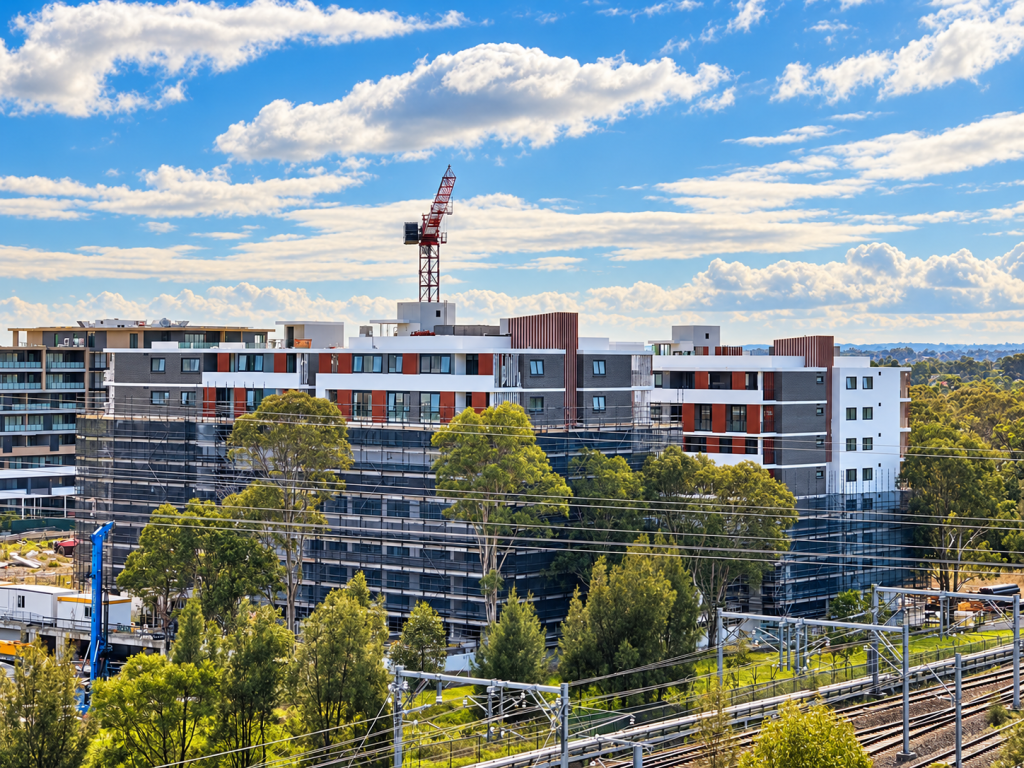
In short: Australia is short of homes, but Sydney prices are still falling, now about 10% below their March peak. A shortage creates long-term pressure, but interest rates, borrowing power and confidence decide what buyers can actually pay today.
Almost everyone involved in property has heard the same argument:
Australia’s population is growing. We aren’t building enough homes. Therefore, property prices have to rise.
It sounds logical. But property markets are rarely that simple.
The demand side
Australia’s population reached approximately 27.8 million at 31 December 2025, increasing by around 412,500 people in just 12 months. Net overseas migration accounted for approximately 301,000 of that increase.
So there is unquestionably more demand for somewhere to live.
The supply side
Then look at housing supply.
Australia has committed to an ambitious National Housing Accord target of 1.2 million new homes over five years to June 2029. According to the National Housing Supply and Affordability Council’s August 2026 report, around 308,000 new homes were completed up to March 2026.
That’s roughly a quarter of the target. At the current pace, the Council estimates it may not be reached until around the end of 2030.
And there’s another complication. There were approximately 244,000 dwellings under construction in the March quarter of 2026, the highest number since the series began in 1984.
So Australia has an enormous construction pipeline. Yet we’re still behind.
So why are we still behind?
One clue is cost.
The same Council reported that house construction costs rose another 2% in the June 2026 quarter and are now approximately 51% higher than before the COVID-19 pandemic.
That raises a question people don’t discuss enough. Having land available is one thing. Obtaining approval is another. Starting construction is another.
Actually completing a financially viable home that someone can afford to buy is something else entirely.
What I’m seeing on the ground
Here in North-West Sydney and the Hawkesbury, I see this play out regularly. Buyers looking at house-and-land packages are weighing up not just the land price, but the build cost and how long construction will take, and those numbers have changed significantly over the past few years.
Shortage, but falling prices?
Here’s where the argument gets more interesting.
If Australia has a structural housing shortage, shouldn’t prices be rising right now?
In Sydney, they aren’t. Dwelling values are now about 10% below their March 2026 peak, according to Cotality, and the Reserve Bank lifted the cash rate to 4.6% in September, a 15-year high.
So two things can exist at the same time: Australia can have a housing shortage while property prices are falling.
Perhaps supply and demand set the long-term pressure on housing, while interest rates, borrowing capacity and confidence decide what buyers can actually pay today.
The better question
If that’s the case, maybe the most useful question isn’t “Are we short of houses?” We already know the answer.
Perhaps it’s this: What happens when a structurally undersupplied market meets a very different interest-rate and borrowing environment?
That’s a much harder question, and probably a more useful one.
What it means for you
- Buyers: a shortage doesn’t guarantee short-term price growth. Buy what you can comfortably afford if rates rise further, rather than rushing out of fear of missing out.
- House-and-land buyers: look beyond the land price. Factor in build costs, construction time and the risk of costs moving while you wait.
- Investors: the long-term supply gap still matters, but holding costs at today’s rates matter more right now. Run the numbers at higher rates, not current ones.
- Owners: today’s prices reflect borrowing conditions, not just supply. If you don’t need to sell, short-term falls matter less than long-term fundamentals.
The bottom line
A housing shortage builds long-term pressure, but it doesn’t override interest rates. In the short term, what buyers can borrow matters more than how many homes we’re missing.
Want articles like this in your inbox every Friday? Subscribe below, or get in touch if you’d like to talk through what’s happening in your area.
General information only. This isn’t financial advice and doesn’t consider your personal circumstances.
Sources
- Australian Bureau of Statistics — National, state and territory population, December 2025
- National Housing Supply and Affordability Council — Quarterly Report, August 2026
- MacroBusiness — Sydney home prices plunge 10% in 237 days (Cotality data)
- ABC News — RBA Financial Stability Review, October 2026


Leave a Reply